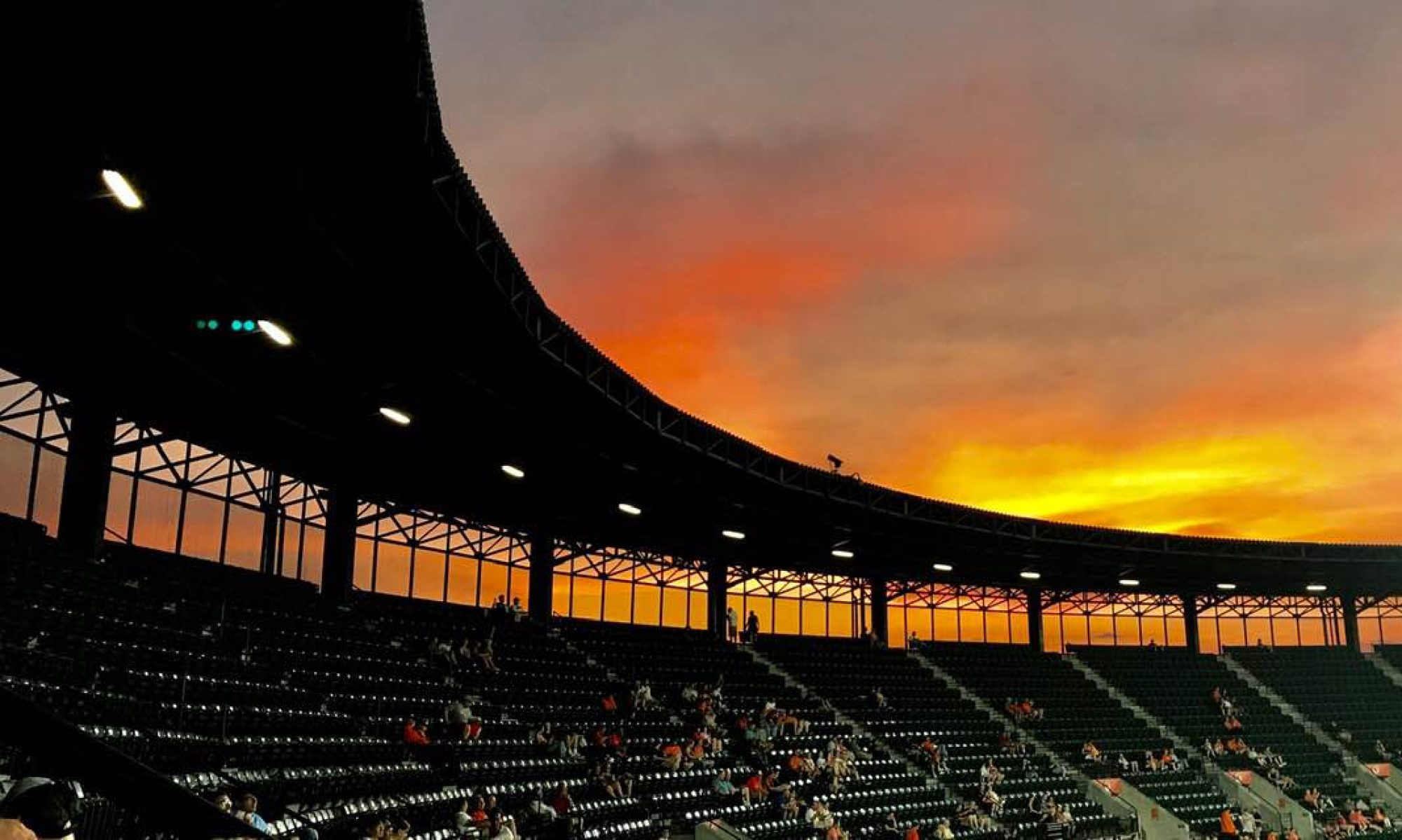
Rob Kirkpatrick is an author and literary agent who lives in New York. He’s worked on several books about baseball – as well as about American society and one about Bruce Springsteen. He has served as a Little League coach, played on a Vintage Base Ball team, and has followed baseball since 1974 – as he says, “probably the worst time to start being a Mets fan.”
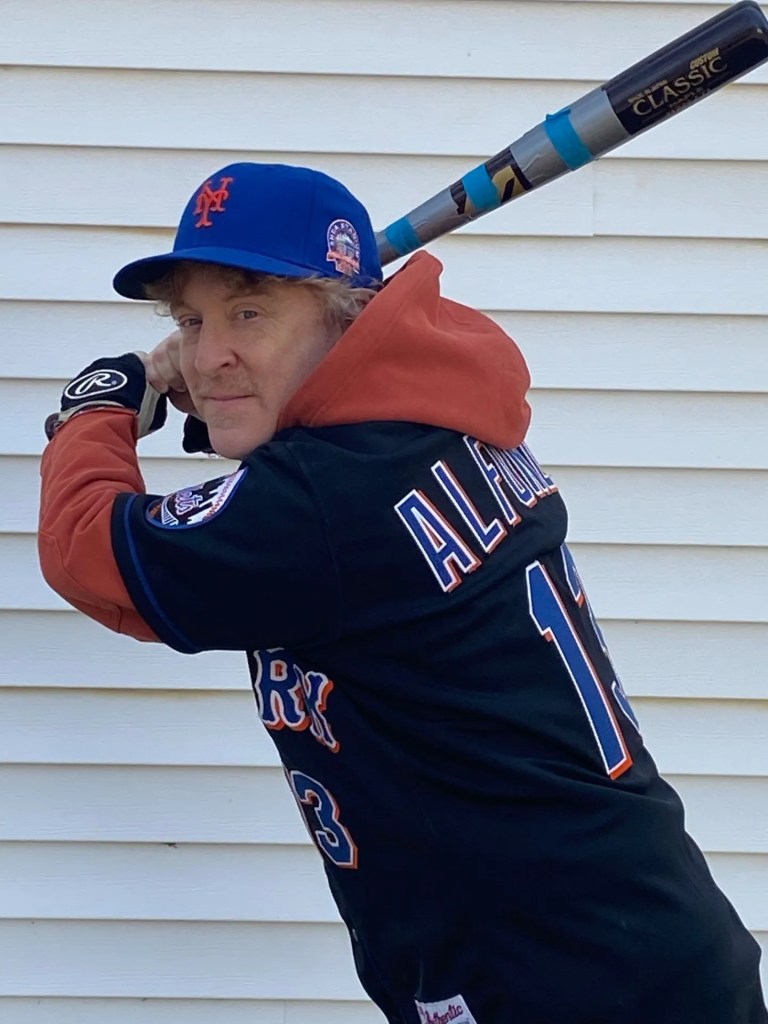
You can read Rob’s full bio at the Conversations page
*

Steve – What was the first ballgame you went to and what do you remember about it?
Rob – My first game was to see the Mets host the Cubs at Shea Stadium on August 1, 1974. My first memory is when I first saw the field from the walkway leading to the box seats and being struck by the vivid colors of the green grass and the orange-brown infield dirt and hearing Jane Jarvis on the organ. The blue and orange of the uniforms stood out, too; we only had a black-and-white television at home, so all this was new to me. That old scoreboard fascinated me; I’d prefer it to the LED monstrosities they have now.
I brought a glove with me and watched batting practice from the first row along the third base line, hoping to catch a ball. Someone drilled one my way and I reached for it and received a harsh lesson on baseball physics and big league spin on batted balls. The ball hit me on the inside of my forearm and left red impressions of the seams in my skin. I cried and my parents bought an ice pop to rub on it.
I also remember thinking nearly every fly ball players hit in the game would be a home run. I found it really hard to judge them from the stands. Wayne Garrett and John Milner did hit home runs that evening, but the Cubs won in extra innings and I cried again. It was a doubleheader and I don’t think we stayed for all of the second game. The Mets lost that one, too. I still have the yearbook and scorecard from that game, and from all the games I went to in the ‘70s.
Coincidentally, August 1 is also my wife’s birthday, though she wasn’t born yet.
Steve – What was the first election you voted in? What do you think have been the most significant changes to our politics since then?
Rob – 1987. My father ran that fall for re-election as town supervisor. I can’t remember what other races there would have been at that time, but it’s pretty common for there to be down-ballot races in off years. I know the town we live in now just had its own town board races in 2023. I was a registered Republican at the time so I could vote for my father. He was a bipartisan Republican who never lost an election. After he retired, I changed party affiliation.
I think the biggest change in politics has been the brazenness with which the Republican party has embraced extremism, fact denialism, contempt for the Constitution and public education, and an unyielding mindset of party over country, politics over patriotism. And this didn’t happen overnight, by the way.
Steve – You wrote that 1969 was ‘The Year Everything Changed‘. Obviously, since then 2001 was another one of those momentous years. Do you think that when Americans look back on our current period in politics, that 2016 will have a similar resonance?
Rob – I suppose. But judging from polling and the early returns from state primaries, I fear we may look back and say 2016 was merely a prelude to 2024. It seems too many people in our country have not learned anything from the mess of 2017-2021. Among everything else that happened, including January 6, the media don’t talk enough about the fact that the former President was caught on tape admitting he had misled the American public about the seriousness of the pandemic. Thousands upon thousands of Americans died because of that wilful deception.
*
Steve – 1969 was of course famously the year of the Miracle Mets and your team is currently in, shall we say, a rebuilding period. How do you see the coming season unfolding and what are the team’s biggest priorities right now?
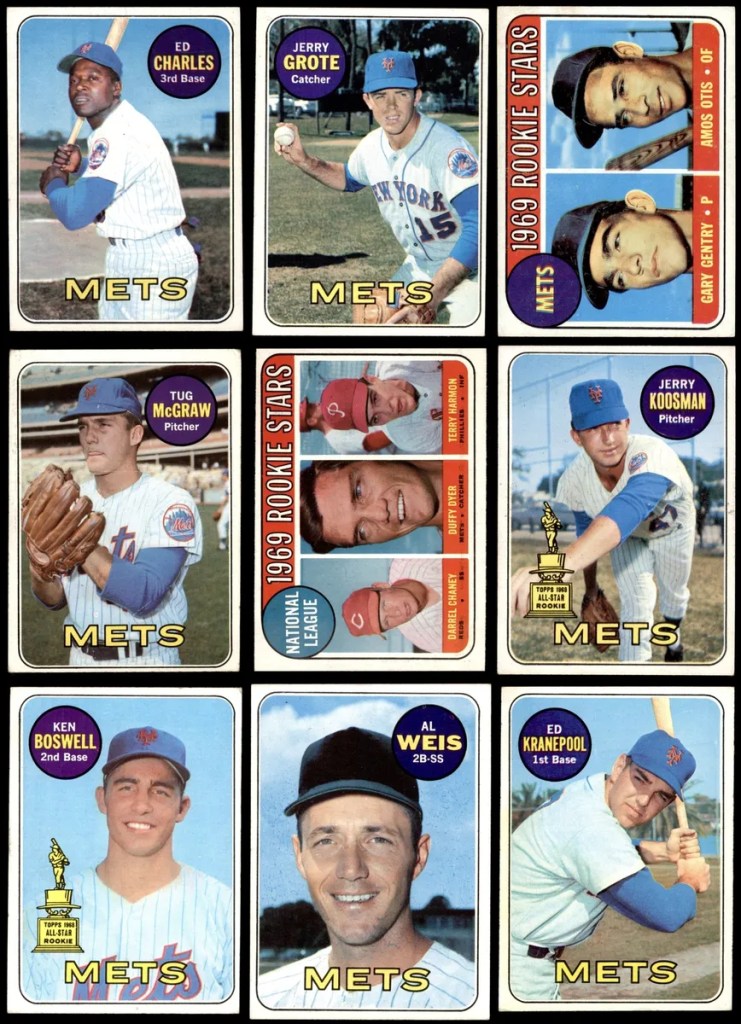
Rob – I don’t have a lot of confidence in our starting rotation, aside from Senga. I think 2024 depends upon the other 4 starters overachieving or rediscovering the stuff they once had. Too many “if”s there. I think our bullpen will be good if Diaz comes back strong and stays healthy. But I think we need another bat. All that said, the consensus seems to be that management is looking ahead toward 2025. I have modest expectations this season and will try to enjoy it for what it is.
What’s your honest assessment of Steve Cohen’s ownership so far?
Cohen missed out on Yamamoto, the big piece he (and I) wanted. I think 2025 might be the defining season. Until then, the jury’s still out. At least the Wilpons are no longer holding the purse.
You’re also a soccer fan – what do you think of the globalised ownership of sports franchises and the effect of money in the game?
I’m very much against sports clubs being used for sportswashing. I also don’t think people or entities or nations should own multiple clubs if those clubs can do business with each other.
*
Steve – Which of your books did you most enjoy working on? Tell us a bit about how the David Wright book came together?
Rob – There are so many that come to mind, and in different contexts of being the agent, editor, or author. I’m a big music fan, as you know, so I was delighted when I acquired and published Kent Hartman’s The Wrecking Crew and it became a sleeper hit that won awards and got a rave review from Janet Maslin. I also get a kick out of the fact I published Viv Albertine’s memoir…Hearing “Train in Vain” on the radio always mades me happy, since she was the inspiration for that song.
The story of how I came to represent David’s memoir, which he wrote with Anthony DiComo of MLB.com, is a pretty good one. I was lying in bed on a Sunday checking my email, literally wearing a David Wright tee and listening to the Mets game on the radio, when I got an email from Anthony pitching me the idea for a book. It reminds me a little of the story of Springsteen reading a bio of Bob Dylan as he sat outside the office of John Hammond. (I’m not likening myself to Springsteen, although he is my favorite artist.) I think I replied to Anthony by writing something like, “You’ve come to the right place.”
David, by the way, was very easy to work with. This won’t come as a surprise to people who watch the game as he was not just a great player but a great spokesman for the game. He was voted the Face of MLB, after all. But in working with David, I was delighted to find that what you see on TV is what you get in real life. It’s certainly a book I’m proud of, and I’m glad David has this memento of his career on his shelf for his children to read.

Of the books that you didn’t work on, what are some of your personal favorites in the worlds of baseball and politics?
I very much enjoyed The Last Best League by Jim Collins, not just because it’s a baseball book but because we used to go to Cape Cod every summer when I was a kid. I also want to recommend Last Days of Summer by Steve Kluger, an epistolary novel about a boy and his favorite WW2-era baseball player.
As for politics … I’m so disgusted by the political scene right now that I struggle to answer. Can I dodge the question a bit and say the work of Milan Kundera?
*
Steve – Talking of years that everything changed, this summer the New York Times shut down its sports section and the LA Times did away with box scores. What do you make of how sports journalism is changing and is the result inevitably a more superficial or commodified approach to sports writing?
Rob – The field is falling victim to the larger business landscape of mergers and acquisitions leading to cuts leading to less competition and less quality. Corporations are rewarded, consumers are not.
It’s also possible that having so much content out there, much of it free, waters down the market for paywalled content. It seems as if everyone has a podcast or substack now. (Even I do.) And that’s great for expanding creative outlets beyond legacy media. But there’s a certain amateurism that walks hand in hand with all the clickbait media out there. I just saw one piece with a headline boldly announcing that [a certain sports figure] will no longer be silenced, yet the piece had no quotes from that figure…so he was still silenced! I doubt a piece like that would get a passing grade in an introductory course in journalism, yet it’ll probably get lots of clicks from its target audience.
Also, Sports Illustrated recently got some bad press of its own after being accused of using AI to generate sports content. What do you think of how AI is being used in journalism generally and how that might play out over time?
I think people don’t understand how bad AI will be for society as a whole. Some good will come with it…but a lot of bad.
*
Steve – Following on from that, around the time I started this project, Jonathan Haidt famously wrote a piece for The Atlantic, arguing “Why The Past Ten Years of American Life Have Been Uniquely Stupid”.
You and I have both worked through a period of some fundamental – and still evolving – changes to how citizens consume and process information. What do you think are the most significant implications of these changes for civic discourse and our politics?
Rob – The echo chambers are even louder. Social media has given a platform to a lot of people who probably shouldn’t have a platform. The loudest bullies have been emboldened. I see sins on both sides of the aisle, but the extremists on the Right are the biggest threat to the nation.
Steve – The recent off-year election results seemed to show voters pulling back from extreme positions, but we’re still seemingly more divided than at any time in recent memory, heading into probably the most important elections in our lifetimes.
With the idea of consensus politics unlikely to return from the disabled list anytime soon, How do you see what’s clearly going to be a chaotic 2024 election cycle unfolding?
Rob – As I sit here today, my feeling is it won’t end well. We need to start planning for 2026 and 2028.
Are local politics as important as national issues? Especially in the context of the redrawing of the the NY state congressional map. And what do you think of the quality of local politicians in New York, following the George Santos debacle?
It really depends on the issue. Sure, local politics can affect us more regularly. But I’m not going to tell a woman who was impregnated against her will and who is being denied healthcare for that condition that “all politics is local.” There was a national—some might say Christian Nationalist—movement behind that.
As for politics in New York State, again, it depends. Santos, by the way, hails from Long Island so he didn’t represent me in any way. I’m also disgusted that Elise Stefanik has anything to do with New York.
*
Steve – Finally back to baseball… Derek Thompson wrote recently that America’s real national pastime was “wondering loudly why people don’t like baseball as much as they used to.”
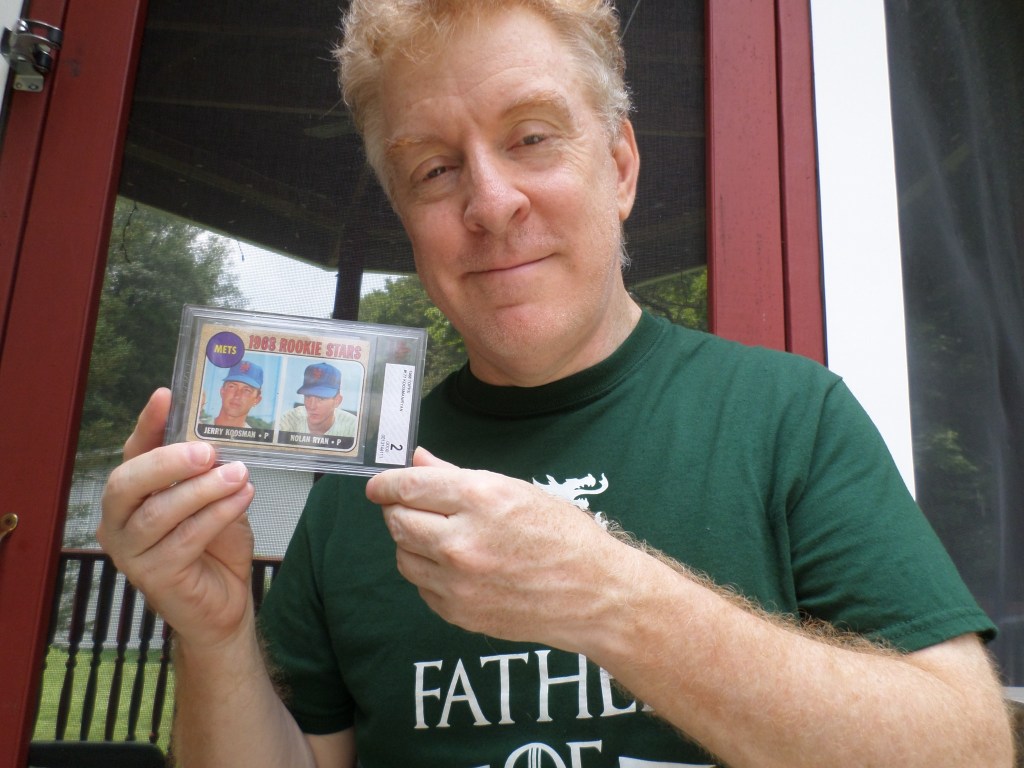
It seems to me – and I think to you too, from our conversations – that the baseball experience is about memories and how we connect to the game and the players; and obviously that will be different for each individual fan. Even something like collecting baseball cards now seems to be more about the market for artifacts than a personal connection between fans and their heroes.
What do you think of the recent changes to how the game is played and watched – and how we understand the ‘value’ of players? And what does MLB have to do to make sure we continue to make those memories in a way that encourages a generational continuity among fans?
Rob – Okay, one of my big things is how much MLB has devalued the regular season. Those 162 games were what separated baseball from other sports. We had a marathon—that you had to win—to qualify for the postseason sprint. Remember all those storied pennant races? 1951, 1967, 1978, 1993, and so forth?
Now, that drama has been sucked out of the game just so owners could squeeze more TV money out of the postseason. Heck, in the current format, some in the game say…and the early evidence seems to back this up…that having the top “seeds” sit out the first playoff series throws off their hitters’ and pitchers’ timing, and so they might actually be at a disadvantage against whoever they play in that second round. We’ll hear players and managers talk about it as something they have to “overcome.”
So what’s the reward for being the best in the league during that 162-game marathon now? Baseball simply isn’t rewarding its best, and the gradual movement from playoffs to a “postseason” has rendered championships more of a crap shoot. And it’s surprising to me how many smart baseball commentators have blinders on about this and insist it makes baseball “more exciting” and will come at you on social media for stepping out of line to say anything different. It’s almost as if they know they’re wrong but they don’t want to be inconvenienced by having to think about it.
And don’t get me started on the extra-inning rule. First of all, it isn’t a “ghost runner.” It’s the complete opposite of a ghost runner. Whoever calls it a ghost runner has never played a 1v1 game of Wiffle Ball. But, really, we’re rewarding the guy who made the last out by putting him on second base? I still remember the first time I saw this rule used; it was in a Little League game in New England twentysome years ago and, even then, I thought it was a silly rule that cheapened the game. That was Little League. And now MLB is using it. Instead of just letting the teams finish a game of baseball, we’re having them play not-baseball by using a rule intended to let Little League parents get home before dark. That may be why some baseball writers like it.
As for your question as to how MLB can continue to make those memories in a way that encourages a generational continuity among fans? How about a greater number of playoff games in the afternoon? World Series games that start before supper and end before bedtime. Remember rushing home from school to turn on the game?
*
You can follow Rob’s Tottenham Hotspur substack Upstate Spurs here.
***
You might also enjoy the following Conversations:
John Miller – ‘Go Play Catch, Kids…’
“Baseball’s too great to ever die, as long as we have a semi-functional society. But its popularity waxes and wanes. And it does need to be entertaining for people to enjoy watching it and want to play it. Part of that is creating a game that has rhythm and doesn’t take forever.”
*
Mike Uy – ‘It’s All Entertainment, Really…’
“Baseball is a special case, at least for America. It’s not the most exciting sport. It’s not the most athletic. It’s got a million weird rules. There’s a ridiculous amount of downtime. It’s not made for TV at all in a world that increasingly doesn’t want to leave their couch. But it feels older and more sacred. That’s the thing it has to offer the others don’t. That’s its edge.”
*
Ken Hornack – ‘Money, It’s A Hit…’
“Baseball stats were my entryway into math as a kid. I took delight in computing batting averages and earned run averages. But while not saying there’s no need for the current glut of statistical information, much of it leaves me cold and unimpressed. Launch angles, exit velocities – that’s not what fathers and sons and friends chat about while watching a game. At least I think not. And good luck finding anybody who likes the ghost runner at second base to begin extra innings.”
*
 States of Play