Welcome to States of Play.
The project now has a new primary home over at Substack, where I write a baseball-related post midweek during the regular season and then a US politics wrap at weekends.
As you’d imagine, one is significantly more sane than the other, particularly given our current chaotic, but crucial, moment.
While Substack is now the main gateway, I’ll be linking to new and older content here, though, so the two sites will grow side-by-side.
As always, thanks for reading.
*
Update, 20 August 2025: As much as I’ve enjoyed talking at you for the past few months, I want to get back to having conversations with you. That was the whole point of this project after all.
After everything that has happened over the past two years that has unforeseeably held me back (as many of you have kindly reminded me, it’s just called “life”) I’m finally going to re-start the Q&As next month, now that I’m relatively sure I won’t need to interrupt things again, and the project will then run through to the end of next season and the increasingly crucial midterms.
Thanks for your support and patience, especially if I had asked you to do a Q&A and I never got around to following up. I’ll be in touch with many of you – and importantly, I’d also like to circle back with the subjects from those first couple of seasons, just to see if anything might have changed.
And I hope we can catch another game together sometime soon.
*
Update, 7 November 2024: Two years ago, I started this writing project with the aim of talking with Americans about things that were important to them as the country recovered from the ravages of Covid and began thinking about what was shaping up to be its most consequential election in my lifetime.
The plan was to start with something we shared – memories inspired by the national pastime – and build on that common connection to discuss how people felt about where the nation stood and where it might be headed. The first two seasons were tremendously rewarding and I’m grateful to everyone who took part. (You can read the Q&As from 2022 and 2023 – and two in a shortened 2024 – here).
But, since life is what happens while you’re busy making other plans, what would have been my concluding 2024 season quickly disappeared as my elderly father’s dementia worsened, leading to a year of ever-shortening trips to the US and an inevitable shifting of priorities. He and I juggled hospitals, home care and eventually his long-term admission to a nursing home back in Belfast. The most physically and emotionally exhausting year of my life crested during the period covering baseball’s post-season and then an unprecedented presidential election campaign that ended two days ago.
It was clear that whatever Tuesday’s outcome, the story wasn’t finished and the coming year would inevitably be one of doubt, disquiet and differing expectations. With Dad thankfully now settled and the relief of him being well looked-after, I want to get back to two of my favourite things – watching baseball and talking to people about how they see the world. So I’m planning to extend the project at least for one more season. I believe simple conversations are going to be more important than ever as we negotiate this uncertain landscape together, so I’m looking forward to renewing the combination of escapism and – relative – seriousness that made the first two seasons so enjoyable.
There are 74 days until the 47th President takes office and about 100 days until pitchers and catchers report for Spring Training.
Let’s see what happens.
*
Follow the rebooted States of Play on Substack here…
*
(This was my original introduction, appropriately on April Fool’s Day 2022…)
Much as I would love it to be, this isn’t primarily a project about baseball.
Rather, it will hopefully be more about America at an uncertain and potentially dangerous time. It’s about institutions, what we thought were established norms and those things that are supposed to unite us rather than divide us. It’s about changes in how we live and organize ourselves, connections between past and present, and where we all might be headed in the shadow of something as both tragic and momentous as a global pandemic.
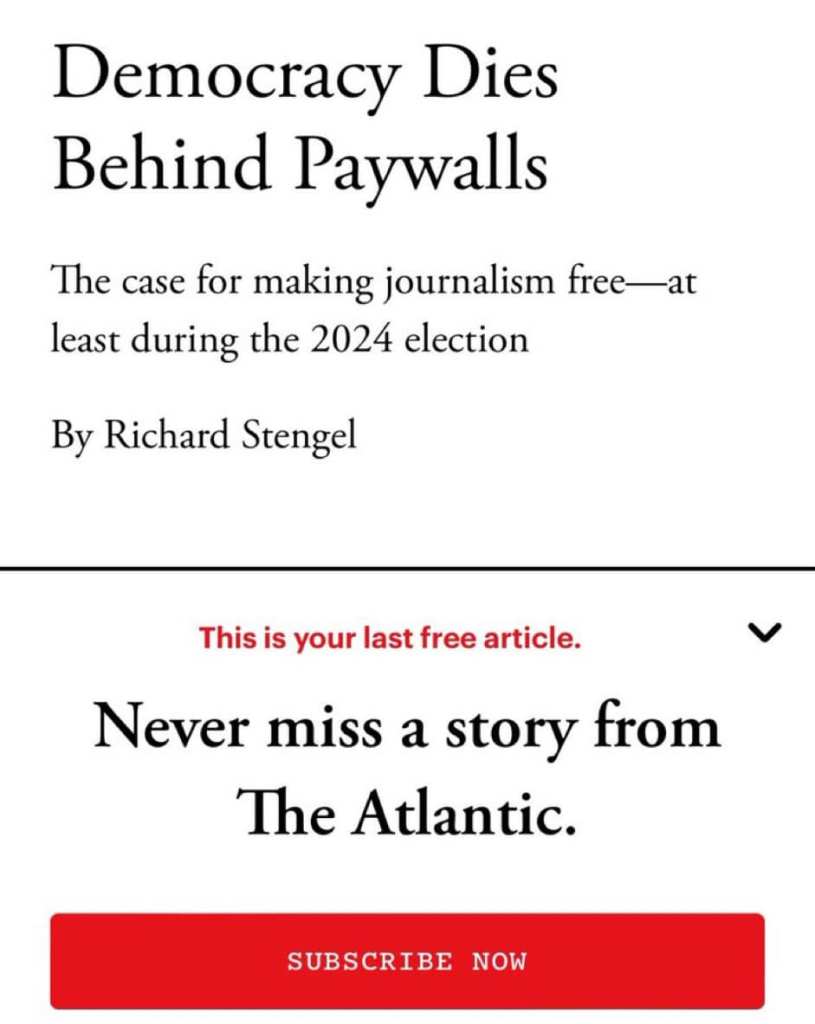
It’s also going to be about journalism; the world in which I’ve been fortunate to spend my career and where the ways people create, share and use information have been undergoing unprecedented disruption. A report in the fall of 2023 signalled that one-third of US newspapers that existed in 2005 “will be gone by 2024”.
State of Local News report 2024 – Medill School, Northwestern.
What takes their place? Increasingly, some believe, a dubious range of social media platforms (although that relationship itself has proved fraught with difficulty); but more hopefully, local online news start-ups.
Good journalism, after all, remains effective journalism. But while it’s far from clear how the industry will shake out, particularly amid the coming wave of Artificial Intelligence-driven offerings, it’s fair to say that readers’ – and citizens’ – previous means of interacting with information is inevitably being turned on its head. And that’s more important than ever in the run-up to such a crucial election year.
As one of this project’s interviewees, a veteran newspaperman, said: “I think most rational people can agree that two newspapers are better than one. I used to say, “The more voices the merrier,” and then Twitter came along. Now I’m not so sure!”
Some, like Steven Waldman, co-founder of the non-profit Report For America, believe the problem can be addressed using the only language too many Americans seem to understand. “If more public or philanthropic money were directed toward sustaining local news,” he writes, “it would most likely produce financial benefits many times greater than the cost.”
But then again, maybe not…
*
Technology has meant we’re inevitably more connected than ever before; and yet we seem to be growing increasingly disconnected, with fewer shared experiences, let alone a collective understanding of who we are or aspire to be.
Baseball is simply the window I’m hoping to use here to explore some of the issues of our time with people who are smarter than me. I’ve been a journalist for thirty years and over these next three crucial seasons I hope to call on some of the folks I’ve met along the way – and some I’ve yet to meet – to help take the pulse of the country as we move towards what will be a pivotal set of elections in 2024.
Take a look at this piece by David Leonhardt at the New York Times from September 2022 as an indicator of how far things have moved, just in the first season of this project. He writes:
“Some experts remain hopeful that the growing attention in the United States to democracy’s problems can help avert a constitutional crisis here. Already, Donald Trump’s efforts to overturn the 2020 election failed, partly because of the refusal of many Republican officials to participate, and both federal and state prosecutors are investigating his actions. And while the chronic decline of majority rule will not change anytime soon, it is also part of a larger historical struggle to create a more inclusive American democracy.
“Still, many experts point out that it is still not clear how the country will escape a larger crisis, such as an overturned election, at some point in the coming decade. “This is not politics as usual,” said Carol Anderson, a professor at Emory University and the author of the book, “One Person, No Vote,” about voter suppression. “Be afraid.””
*
The following January, Harvard Professor Danielle Allen wrote eloquently and personally that the nation had been undergoing a “great pulling apart” and the house we all share was in need of renovation.
“My overarching goal,” she wrote, “is a Great Pulling Together that gives us the civic strength needed to tackle the challenges that stem from the remarkable scaling up and complexifying of our society. Those challenges include stalled mobility and dysfunctional immigration policies; the climate crisis; social alienation, disempowerment and violence. These are our most difficult problems. We need governance up to the job of tackling them.”
In America today, what defines “community” is changing – perhaps faster over the past few years than at any time in recent history. As this project unfolds, I imagine it being part-travelog, part-memoir, part-snapshot of a country and how it thinks about itself. But that will depend on the interests of the people who sit down for a chat, so hopefully the temptation of taking a couple of hours out to watch at least part of a game in one form or another will help sell the idea.
The rhythm of a baseball game allows for conversations about things that matter as well as things that don’t; about both serious events that overshadow the moment and ephemeral things that are gone in the time between one inning and the next. The usually friendly confines of a ball game, therefore, would seem to be the perfect catalyst for a series of conversations reflecting the state of the nation, large and small.
For some people, of course, baseball will always be a means of temporary escape from the “real” world – and that, too, tells us something about our modern lives as well as the state of the nation and the resilience of the game as a refuge from it.
*
It seems that anyone writing about baseball and society – particularly someone who grew up outside the US – invariably ends up quoting Jacques Barzun, the French-American cultural historian who famously wrote in the mid-1950s that “Anyone who wants to know the heart and mind of America had better learn baseball.” Yet half a century later he apparently recanted, alluding to how commercialization of the nation’s pastime had disconnected it from the soul of the country, part of an overall worldview reflecting what he saw as the accelerating decadence of the West.
(It was probably appropriate that when Barzun was awarded the Presidential Medal of Freedom in 2003, a recipient posthumously honored that day was Roberto Clemente.)
Matthew Trueblood wrote on Barzun’s passing in 2012 about how the game and American society had changed since that initial romantic observation, saying that “although he opined less on sports as a vehicle for public edification and diversion in recent years, I suspect he would approve of what [baseball] has done, and of what it’s capable of doing.” Given the ever-more rapidly cyclical nature of popular culture, we can obviously only speculate what he might make of it now, a decade after his death, as it prepares for the rebirth of a new season after yet another potentially debilitating labor dispute.
When I was trying to describe the idea behind States of Play to someone recently, I said it would be like if Barzun, Bill Bryson and Alexis de Tocqueville were all having a beer in the bleachers and Alistair Cooke did a broadcast about it. I can only hope it turns out to be a fraction that much fun.
Let’s see what happens.
April 1, 2022
*
Perhaps the perfect contextual kick-start to the project came later in April when Jonathan Haidt wrote in The Atlantic on “Why the past ten years of American life have been uniquely stupid”.
He says, in part:
“The story of Babel is the best metaphor I have found for what happened to America in the 2010s, and for the fractured country we now inhabit. Something went terribly wrong, very suddenly. We are disoriented, unable to speak the same language or recognize the same truth. We are cut off from one another and from the past.
“It’s been clear for quite a while now that red America and blue America are becoming like two different countries claiming the same territory, with two different versions of the Constitution, economics, and American history. But Babel is not a story about tribalism; it’s a story about the fragmentation of everything. It’s about the shattering of all that had seemed solid, the scattering of people who had been a community. It’s a metaphor for what is happening not only between red and blue, but within the left and within the right, as well as within universities, companies, professional associations, museums, and even families.”
Haidt’s piece seemed to be the perfect bookend to the famous ‘Cult of Ignorance’ article Isaac Asimov had written for Newsweek in 1980, a couple of years before I first came to America. In it, he wrote:
“There is a cult of ignorance in the United States, and there has always been. The strain of anti-intellectualism has been a constant thread winding its way through our political and cultural life, nurtured by the false notion that democracy means that ‘my ignorance is just as good as your knowledge.”
***
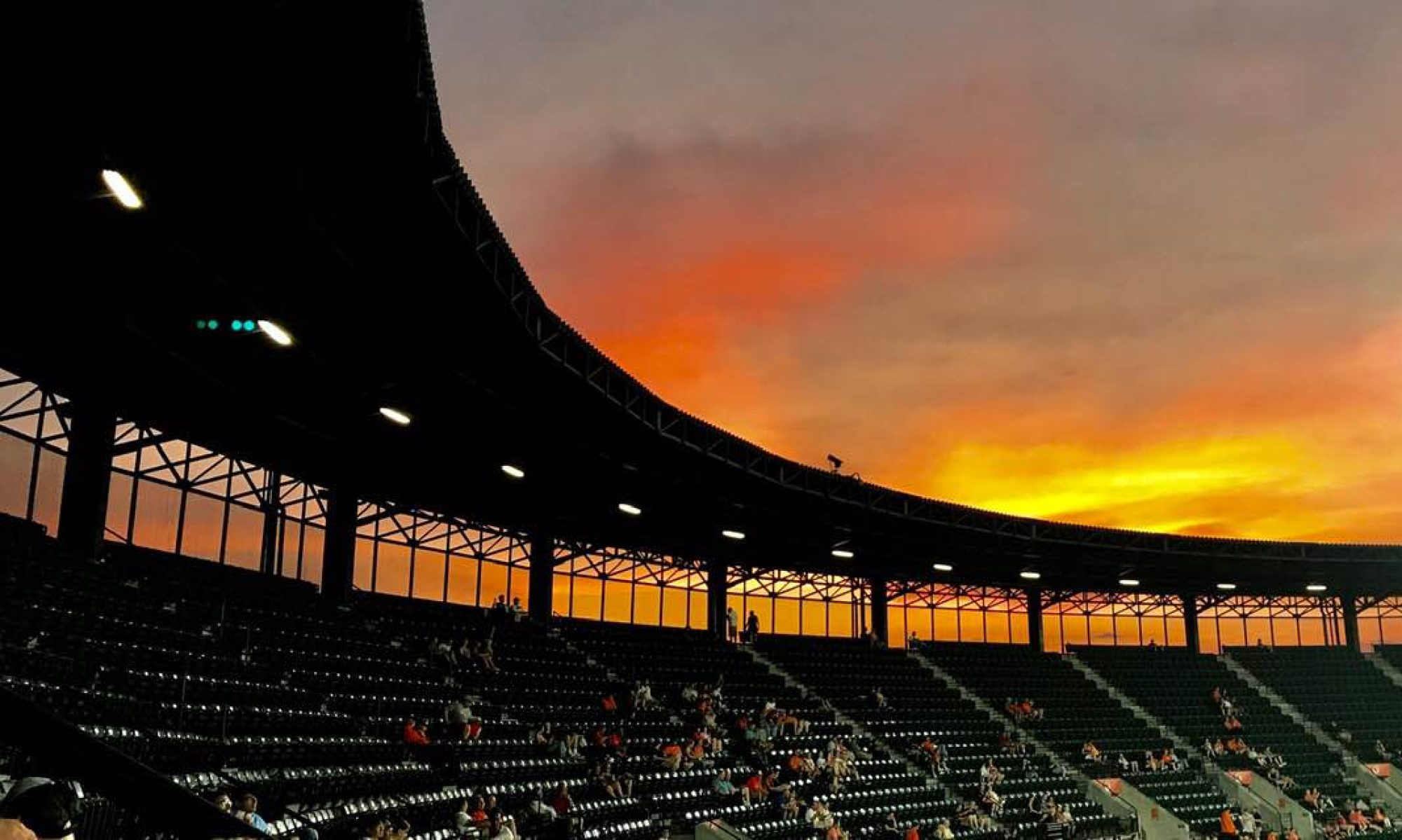
- A quick note about the image: I took this (unfiltered and unretouched – read “artistically blurry”) photo at Camden Yards in Baltimore a few years ago and was always fond of it because it was in Orioles’ colors. Not to get too serious about these things, but maybe you might see a metaphor in it today; something grandiose about the world being on fire, or the sunset of democracy? I couldn’t possibly comment.
Most of the photos on the site are mine. The ones that aren’t are credited. If I miss any, I apologise in advance.
***
You can navigate through the other sections on this site either by using the menu at the top of each page, or from quick links here:
Latest – A quick snapshot of the news stories of the day
Month-by-Month – A more detailed chronological narrative to help keep track of context
Games – Game Notes season-by-season
Instagram – pics on a relatively regular basis
Conversations – An index of Q&As along the way
Sources and Resources – Some quick links to further reading and listening
*
 States of Play